上海视觉

上海视觉 ›› 2025, Vol. 0 ›› Issue (3): 92-100.

• 艺术实践 • 上一篇    下一篇

感知人、纸、物关系的具身体验之创造性潜能研究——基于古法造纸的田野调查

王彬雪1,2, 李敏1,2   

  1. 1.上海外国语大学贤达经济人文学院,上海, 200083
    2.上海大学,上海 200444
  • 出版日期:2025-09-20 发布日期:2025-09-03
  • 作者简介:王彬雪(1991— ),女,上海大学硕士,上海外国语大学贤达经济人文学院讲师。研究方向为非遗手工艺传承与数字化传播研究。
    李敏(1967— ),女,上海大学博士,上海大学上海美术学院教授。研究方向为东西方装饰艺术理论研究、非遗手工艺传承及实践创作研究。
  • 基金资助:
    上海市学校艺术科研项目课题“基于‘课题驱动’非遗传承艺术课程融合教学模式与实践研究”的阶段成果(编号HJYS-2019- B09)

Research on the Creative Potential of Embodied Experience in Perceiving the Relationship between People, Paper, and Objects: A Field Investigation Based on Ancient Papermaking Techniques

WANG Binxue1,2, LI Min1,2   

  • Online:2025-09-20 Published:2025-09-03

摘要:

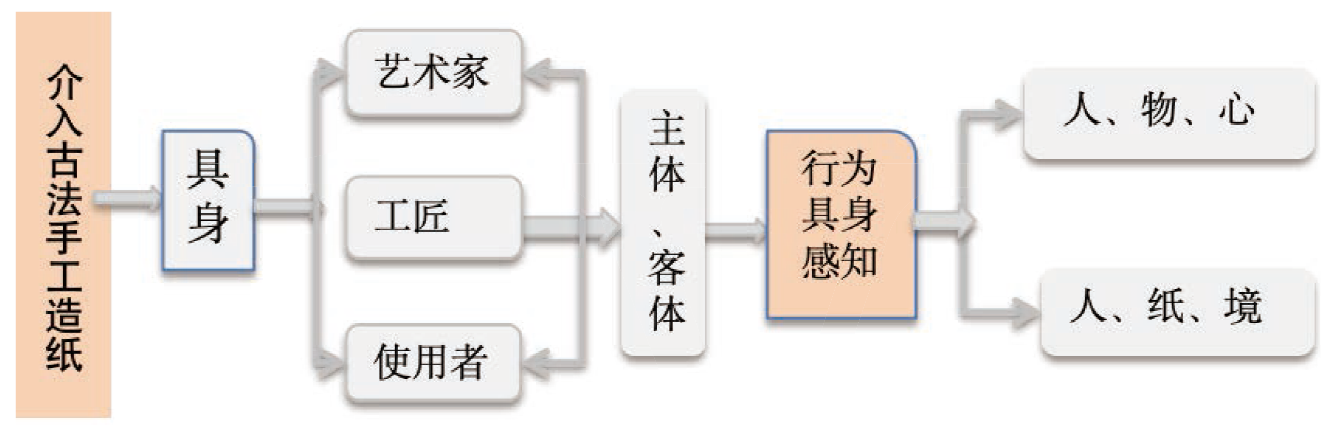
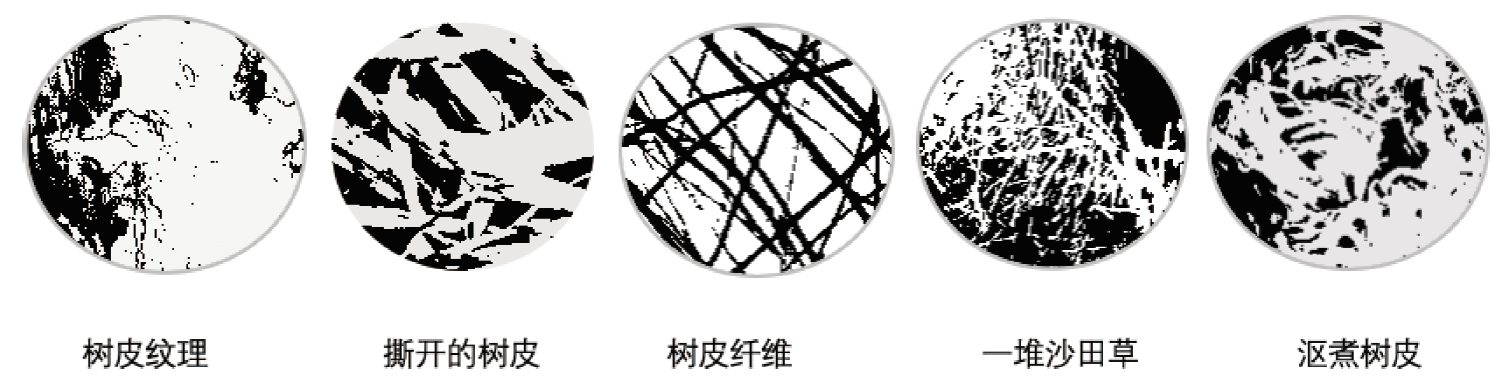
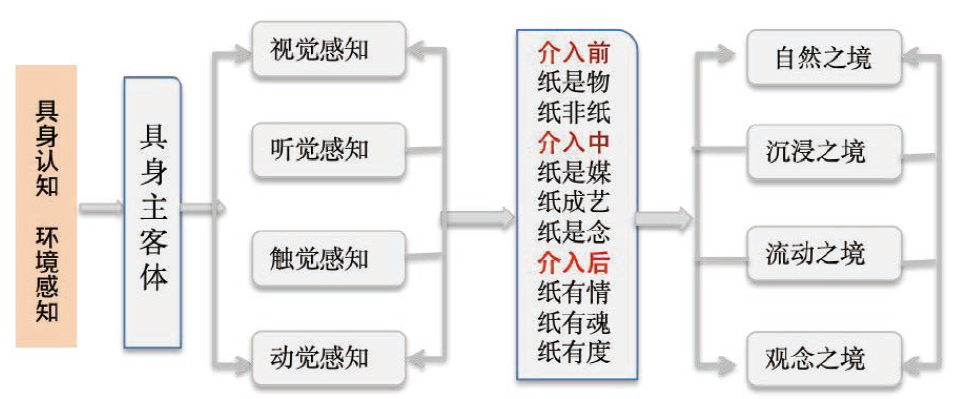
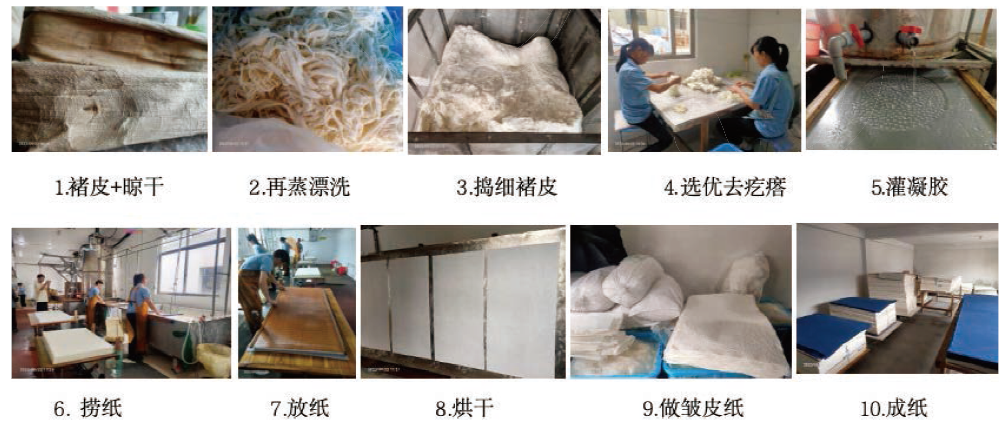
本研究以古法造纸为切入点,通过田野调查探讨人、纸、物之间的具身体验及其所蕴含的创造性潜能。在深入古法造纸的产地时,采取参与观察、调研访谈等方式,详细记录造纸过程中身体动作、工序流程以及从树到皮、由皮到浆、由浆到纸的转变过程,揭示传统手工艺是如何通过"身体-物质-环境"的耦合关系激发人的感知。研究发现,在古法造纸的行为制造、技术运用、身体姿势、动作节奏、偶发肌理的生产过程中,具身认知理论阐释身体“四维”感官体验能够激发创造性潜能,并为创造提供灵感来源和新路径。由此可见,“田野调查驱动”下艺术介入非遗传承的融合教学与实践,为学生创造性潜能培养提供了典型案例。

关键词: 具身体验, 古法造纸, 创造性潜能

Abstract:

This study takes ancient papermaking as an entry point and utilizes field research to explore the embodied experience of perceiving the relationship between people, paper, and materials, as well as the creative potential of this experience. By immersing in the production sites of ancient papermaking and employing methods such as participatory observation and interviews, the research documents the bodily movements, production processes, and the transformation of raw materials—from tree to bark, bark to pulp, and pulp to paper. It investigates how traditional craftsmanship stimulates human perception through the coupling of "body-material-environment." The findings indicate that in ancient papermaking, the interaction among technical application, bodily postures, rhythmic movements, and the production of incidental textures reflects the theory of embodied cognition, which elucidates how the "four-dimensional" sensory experiences of the body can inspire creative potential. It is suggested that the integrated teaching and practice of "field-driven" artistic intervention in intangible cultural heritage inheritance may provide a model for cultivating students' creative potential.

Key words: Embodied Experience, Ancient Papermaking, Creative Potential