上海视觉

上海视觉 ›› 2024, Vol. 0 ›› Issue (4): 161-167.

• 国际连线 • 上一篇    

异域之眼:《燕行录》中朝鲜使臣视域下的清代戏台文化

赵子夜, 王广义   

  1. 吉林大学,长春 130012
  • 出版日期:2024-12-20 发布日期:2025-03-20
  • 作者简介:赵子夜(1993— ),男,吉林大学,法学博士,吉林大学马克思主义学院,讲师,硕士生导师。研究方向为中国近现代文艺史。
    王广义(1972— ),男,吉林大学,历史学博士,吉林大学马克思主义学院,吉林大学“匡亚明学者”英才教授,博士生导师。研究方向为中国近现代史文艺史。
  • 基金资助:
    吉林省社会科学基金项目“习近平文化思想的国际传播研究(2024C11)”阶段性研究成果;吉林大学“研究阐释习近平文化思想”哲学社会科学研究专项项目“习近平文化思想的时代要求、科学内涵与现实意义研究(SKX2024009)”阶段性研究成果

Exotic Eyes:The Cultural Aspects of Qing Dynasty Opera Stage from the Perspective of Korean Envoys in Yeon’haeng-rok

ZHAO Ziye, WANG Guangyi   

  • Online:2024-12-20 Published:2025-03-20

摘要:

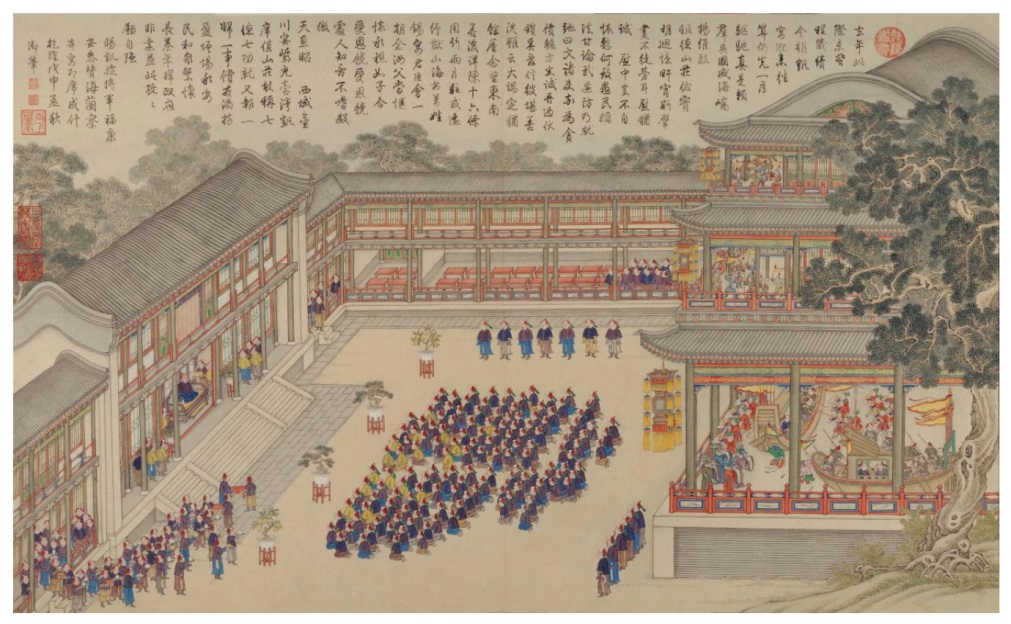
中朝两国一衣带水、比邻而居的地域特性使得二者在政治、经济、文化等领域长期保持紧密联系。朝鲜使臣也由此频繁往返两国之间,成为中朝两国文化交流的媒介桥梁。清代,朝鲜使臣使华途中将其见闻悉数著录成籍,形成《燕行录》。同时,由于朝鲜使节团成员对于中国文化的浓厚兴趣使得其颇为关注中国戏曲。因此,《燕行录》中详细记载了大量所见戏曲艺人登台演绎之场所,即戏曲舞台。既有金碧辉煌、精致独特的宫廷戏楼翔记,也有冲州撞府、简易朴素的民间簟台速录。既有戏台规格形制的描述,也有戏台风格装饰的比较,从他者视角揭示了传承性、世俗性、隐喻性及教化性的戏台风格特征,为探索清代戏台文化提供了丰富的史料文献。

关键词: 《燕行录》, 传统文化, 戏曲舞台

Abstract:

The regional characteristics of China and Korea, which are closely neighboring each other have enabled them to maintain close ties in the political, economic, and cultural fields for a long time. As a result, the Korean envoys frequently traveled back and forth between the two countries, becoming a bridge for cultural exchanges between China and Korea. In the Qing Dynasty, the Korean envoys recorded all the things they saw and heard on the way to China, forming the Yeon’haeng-rok. At the same time, the members of the Korean delegation paid close attention to Chinese opera due to their strong interest in Chinese culture. Therefore, the Yeon’haeng-rok records in detail a large number of places where opera artists performed on stage, that is, the opera stage. There are not only detailed records of the splendid, and exquisite, and unique palace theaters, but also simple folk mobile stage shorthand records running around. There are not only descriptions of the specifications and shapes of the stage, but also a comparison of the style and decoration of the stage, which reveals the characteristics of the inheritance, secular, metaphorical, and edifying stage style from the perspective of others, and provides a wealth of historical documents for exploring the stage culture of the Qing Dynasty.

Key words: Yeon’haeng-rok, traditional culture, opera stage