| [1] |
Bonsiepe G. Del Objeto A La Interfase: Mutaciones Del Diseño[M]., 1999:17,69,22,123-145.
|
| [2] |
Touraine A. Critique De La Modernité[M]. Fayard, 2014:264.
|
| [3] |
Harwood J. The Interface: IBM and The Transformation of Corporate Design, 1945-1976[M]. U of Minnesota Press, 2011.
|
| [4] |
Hellige, Hans Dieter. Krisen- und Innovationsphasen in der Mensch-Computer-Interaktion[M]//Mensch-Computer-Interface: Zur Geschichte und Zukunft der Computerbedienung. Bielefeld: transcript, 2008: 11-92.
|
| [5] |
Machover C. Four Decades of Computer Graphics[J]. IEEE Computer Graphics and Applications, 1994, 14(6): 14-19.
|
| [6] |
Lund O. The Public Debate on Jock Kinneir's Road Sign Alphabet[J]. Typography papers, 2003, 5: 103-126.
|
| [7] |
Czemper, Karl-Achim. hfg ulm.Die Abteilung Produktgestaltung.39 Rückblicke[C]. Ulm: Schriftenreihe des club off ulm e.v., 2008:58.
|
| [8] |
何宇. 乌尔姆设计学院科学方法论思想的内涵与冲突[J]. 南京艺术学院学报(美术与设计版), 2022(05):78-83.
|
| [9] |
Oswald D. The Information Department at the Ulm School of Design[J]. Blucher Design Proceedings, 2012, 1(1): 46-50.
|
| [10] |
赫伯特·林丁格尔. 乌尔姆设计——造物之道(乌尔姆设计学院1953-1968)[M]. 王敏, 译. 北京: 中国建筑工业出版社, 2011:144.
|
| [11] |
Wiener N. Cybernetics[J]. Scientific American, 1948, 179(5): 14-19.
pmid: 18890151
|
| [12] |
Langley P. Symbols and Search in Humans and Machines[M]//Elgar Companion to Herbert Simon. Edward Elgar Publishing, 2024: 33-54.
|
| [13] |
Burckhardt L. Design is Invisible: Planning, Education, and Society[M]. Birkhäuser, 2017.
|
| [14] |
Krampen M, Hörmann G. Die Hochschule für Gestaltung Ulm/The Ulm School of Design: Anfänge Eines Projektes der Unnachgiebigen Moderne/Beginnings of a Project of Unyielding Modernity[M]. Ernst & Sohn, 2003.
|
| [15] |
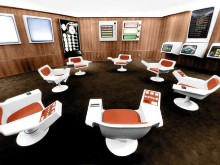
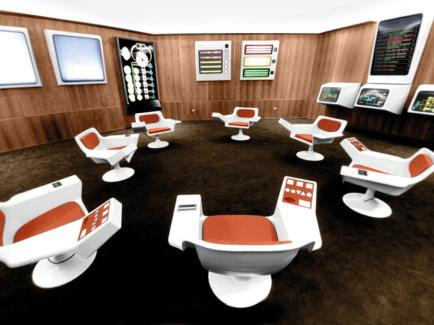
Vehlken S. Operative Communication: Project Cybersyn and the Intersection of Information design, Interface Design, and Interaction Design[J]. AI & SOCIETY, 2022, 37(3):1136.
|
| [16] |
Robillard G. Max Bense as a Visionary: from Entropy to the Dialectics of Programmed Images[J]. ArXiv preprint arXiv:2407.02492, 2024:4.
|
| [17] |
Bense M. Texte und Zeichen Als Information. Ein Experimenteller Lehrplan für Information an der Hochschule für Gestaltung, Ulm/Klasse Prof. Max Bense[J]. Texte und Zeichen, 1956, 4:437-440.
|
| [18] |
Oswald D. Cybernetics, Operations Research and Information Theory at the Ulm School of Design and its influence on Latin America[J]. AI & SOCIETY, 2022, 37(3):1052.
|
| [19] |
Bonsiepe G, Cullars J. The Invisible Facets of the hfg ulm[J]. Design Issues, 1995, 11(2):14.
|
| [20] |
Medina E. Designing Freedom, Regulating a nation: Socialist Cybernetics in Allende's Chile[J]. Journal of Latin American Studies, 2006, 56.
|
| [21] |
Bonsiepe G. Design im Übergang zum Sozialismus: Ein Technisch-Politischer Erfahrungsbericht aus dem Chile der Unidad Popular (1971-73)[M]. Designtheorie, 1974,51.
|
| [22] |
Fathers J, Bonsiepe G. Peripheral Vision: An Interview with Gui Bonsiepe Charting a Lifetime of Commitment to Design Empowerment[J]. Design Issues, 2003, 19(4): 44-56.
doi: 10.1162/074793603322545055
|
| [23] |
Secomandi F, Snelders D. Interface Design in Services: A Postphenomenological Approach[J]. Design Issues, 2013, 29(1): 3-13.
doi: 10.1162/DESI_a_00192
|
| [24] |
Dubberly H. Gui Bonsiepe: Framing Design as Interface[J]. The Disobedience of Design: Gui Bonsiepe, 2021: 1-7.
|
| [25] |
Maturana H. Autopoiesis, Structural Coupling and Cognition: A History of These and Other Notions in the Biology of Cognition[J]. Cybernetics &Human Knowing, 2002, 9(3-4): 5-34.
|
| [26] |
Berry R E. Common User Access-A Consistent And Usable Human-Computer Interface for The SAA Environments[J]. IBM Systems Journal, 1988, 27(3): 281.
doi: 10.1147/sj.273.0281
|
| [27] |
Said E W. Humanism and Democratic Criticism[M]. Columbia University Press, 2004.
|
| [28] |
Bonsiepe G. Design and Democracy[J]. Design issues, 2006, 22(2): 30.
|
| [29] |
Winograd T, Flores F. Understanding Computers and Cognition: A New Foundation for Design[M]. Norwood, NJ: Ablex publishing corporation, 1986:78.
|