| [1] |
Wolfe C. What Is Posthumanism?[M]. Minneapolis: University of Minnesota Press, 2010.
|
| [2] |
[法] 福柯. 词与物:人文科学的考古学[M]. 莫伟民, 译. 上海: 上海三联书店, 2002:506.
|
| [3] |
Braidotti R. Posthuman critical theory[M]//Critical Posthumanism and Planetary Futures. New Delhi: Springer India, 2016: 13-32.
|
| [4] |
Haraway D. Simians, Cyborgs, and Women: The Reinvention of Nature[M]. Routledge, 1991.
|
| [5] |
Luhmann N. Social Systems[M]. Translated by JohnBednarz Jr. and DirkBaecker, Stanford University Press, 1995.
|
| [6] |
Derrida J. The Animal That Therefore I Am[M]. Translated by DavidWills, Fordham University Press, 2008.
|
| [7] |
Kac E. GFP Bunny[EB/OL]. ekac.org, [2025-04-20]. https://www.ekac.org/gfpbunny.html.
|
| [8] |
Pepperell R. The posthuman manifesto[J]. Kritiko, 2005(02):1-15.
|
| [9] |
Coulombe M. Entrer dans la mer: post-humanitéet dissolution du moi[J]. Cahiers de Recherche Sociologique, 2011(50):141-157.
|
| [10] |
Oancea R. I. Art and Politics in the Posthuman Paradigm.[J]. Annals of the University of Bucharest - Philosophy Series, 2018, LXVII(01): 185-204..
|
| [11] |
Sender R., Fuchs S., Milo R. Revised Estimates for the Number of Human and Bacteria Cells in the Body[J]. PLoS Biology, 2016(8): e1002533.
|
| [12] |
Sorgner S L. On Transhumanism[M]. Penn State University Press, 2021.
|
| [13] |
Bennett J., Klaus K L. Vibrant matter, zero landscape: Interview with Jane Bennett[J]. Eurozine, 2011:18.
|
| [14] |
Sorgner S L. Philosophy of Posthuman art[M]. Schwabe Verlag, 2022:26.
|
| [15] |
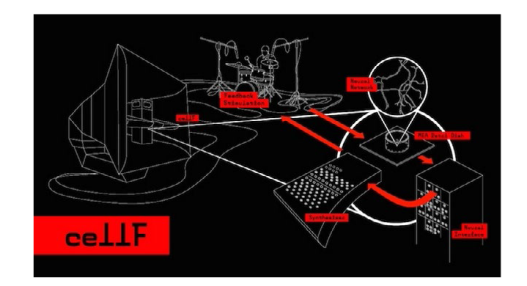
Ben-Ary G. CellF[EB/OL]. [2026-04-30]. https://guybenary.com/work/cellf/.
|
| [16] |
Stelarc D. From Psycho-Body to Cyber-Systems: Image as Post-human Entities[M]// BellD, KennedyB, eds. The Cybercultures Reader. Routledge, 2000: 560-576.
|
| [17] |
Kabakov I. On the Total Installation[M]. Bonn: Cantz Verlag, 1995:200.
|
| [18] |
Rebentisch J, Hendrickson D. Aesthetics of Installation Art[M]. Berlin: Sternberg Press, 2012:35.
|
| [19] |
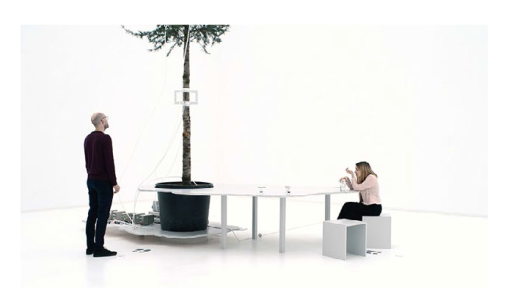
Meyer-Brandis A. One Tree ID - How to Become a Tree for Another Tree[EB/OL]. blubblubb.net, [2025-04-20]. http://www.blubblubb.net/OneTreeID/index.html.
|
| [20] |
[英]克莱尔·毕肖普. 装置艺术一部批评史[M].张钟葡, 译. 杭州: 中国美术学院出版社, 2021:56.
|
| [21] |
Deleuze G. Essays Critical and Clinical[M]. Translated by DanielW. and MichaelA., Minneapolis: University of Minnesota Press, 1997:61-67.
|
| [22] |
[法] 吉尔·德勒兹. 批评与临床[M].刘云虹, 等, 译. 南京: 南京大学出版社, 2022:125-138.
|
| [23] |
Deleuze G., Guattari F. A Thousand Plateaus[M]. University of Minnesota Press, 1987:238; 294
|
| [24] |
Massumi B. The Autonomy of Affect[J]. Cultural Critique, 1995(31): 83-109.
|
| [25] |
Massumi B. Parables for The Virtual:Movement, Affect, Sensation[M]. Durham, NC: Duke University Press, 2021: 30;29-33.
|
| [26] |
[加]布莱恩·马苏米. 情动力政治[M]. 彭小妍, 译. 台北: 联经出版事业股份有限公司, 2024:9.
|
| [27] |
Catts O, and Zurr I. The ethics of experiential engagement with the manipulation of life[M]// Da Costa B, Philip K, eds. Tactical Biopolitics-Art, Activism, and Technoscience. MIT Press, 2010:125-142.
|
| [28] |
Massumi B. Semblance and Event: Activist Philosophy and The Occurrent Arts[M]. MIT press. 2011:19
|
| [29] |
Palmer D. Ryoji Ikeda: The aesthetics of data flow[J]. Artlink, 2018(38): 66-69.
|
| [30] |
Spinoza. Ethics[M]. W. H. White, trans. Hertfords: Wordsworth Editions, 2001.
|
| [31] |
Massumi B. Envisioning the Virtual[M]//Mark Grimshaw-Aagaard ed. The Oxford Handbook of Virtuality, Oxford Academic, 2014:55-70.
|
| [32] |
Anadol R. Synaesthetic architecture: A building dreams[J]. Architectural Design, 2020(03): 76-85.
|
| [33] |
Benko S. Ethics, technology, and posthuman communities[J]. Essays in Philosophy, 2005, 6(1): 9-28.
doi: 10.5840/eip20056115
|